

Forwarding is available from the composer once you’ve taken over a ticket. The
forward is always sent as an email, regardless of the ticket’s original
channel.
When to use this feature
Use forwarding when the answer lives with someone who doesn’t work in Typewise and you need to stay on the ticket while you wait for them:- Escalate to an internal team that works in a different tool (for example, finance or legal working in Outlook).
- Ask an external partner or supplier for information.
- Send a case to a regulatory authority for a compliant, on-record request.
How to forward a ticket
1
Take over the ticket
The composer, and the Forward option, are only available once you’ve taken
over the ticket.
2
Open the message type selector
Click the dropdown button next to the send button in the composer.
3
Select Forward
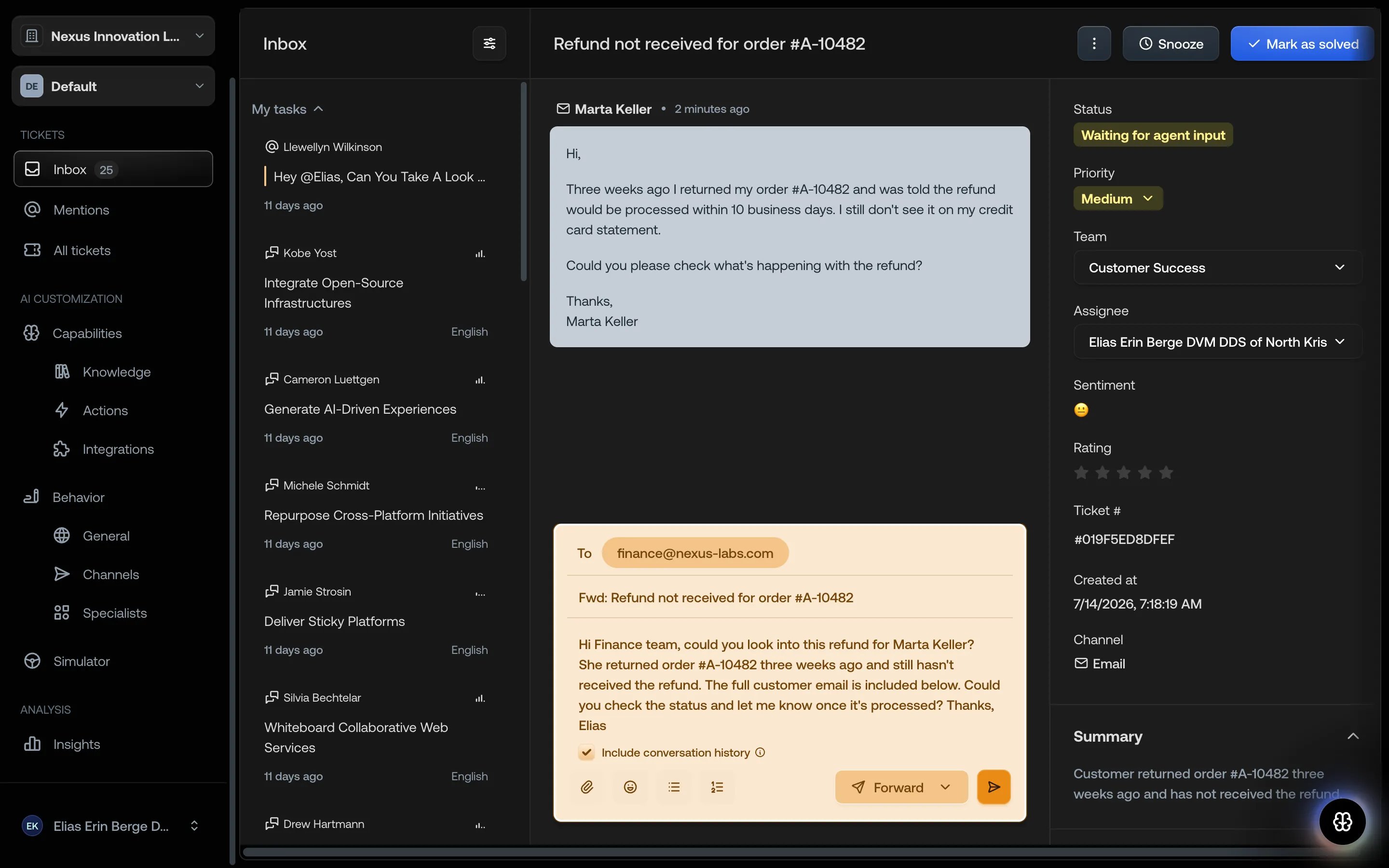
Choose Forward from the dropdown. The composer switches to forward mode
and shows the email header fields.
4
Enter the recipients
Type an email address in the To field and press enter to add it as a
chip. Add as many addresses as you need. As you type, Typewise suggests
addresses you’ve forwarded to before. You can forward to any valid email
address.
5
Review the subject
The subject is pre-filled with a Fwd: prefix and the ticket title. Edit
it before sending if needed.
6
Write your message
Write the message the recipient should read first, using the same rich text
editor, emoji picker, and attachments as a normal reply.
7
Choose whether to include history
Include conversation history is on by default. It appends the full
customer conversation, and its attachments, below your message so the
recipient has the full context. Turn it off to send only your message.
8
Send
Click send. The ticket is forwarded and automatically snoozed while you wait
for a reply.
Each recipient gets its own forward, exactly as if you had forwarded the
ticket once per address. Recipients never see each other: every email is
addressed only to the person receiving it, and each reply comes back as its
own thread on the ticket.
What happens after you forward
- The ticket is automatically snoozed until the next reply, so it leaves your inbox and does not auto-close while you wait.
- The ticket status changes to Snoozed (there is no separate “waiting on external” status).
- A forward event is recorded in the ticket timeline, showing who forwarded, to whom, and when.
- If the customer replies in the meantime, the snooze is cancelled and the ticket returns to your inbox as usual. The forward is unaffected.
When the external party replies
The recipient replies to the forwarded email as they would to any message. Typewise matches the reply back to the original ticket automatically, even if it comes from a different address than the one you forwarded to.- The reply lands on the original ticket as an internal note. It is never shown to the customer.
- The ticket is unsnoozed and returns to your inbox.
- A toast notification tells you a forward reply arrived, with a button to open the ticket.
In the inbox
Forward replies appear as their own card in the inbox, marked with a forward icon so you can tell them apart from customer tickets and mentions.Forward replies stay in the inbox for 5 days. After that they drop off the
inbox automatically, but the note remains on the ticket.
In the conversation
The forward and its replies render inline in the conversation as an internal thread, showing your original forward, your follow-up replies, and the external party’s replies in order.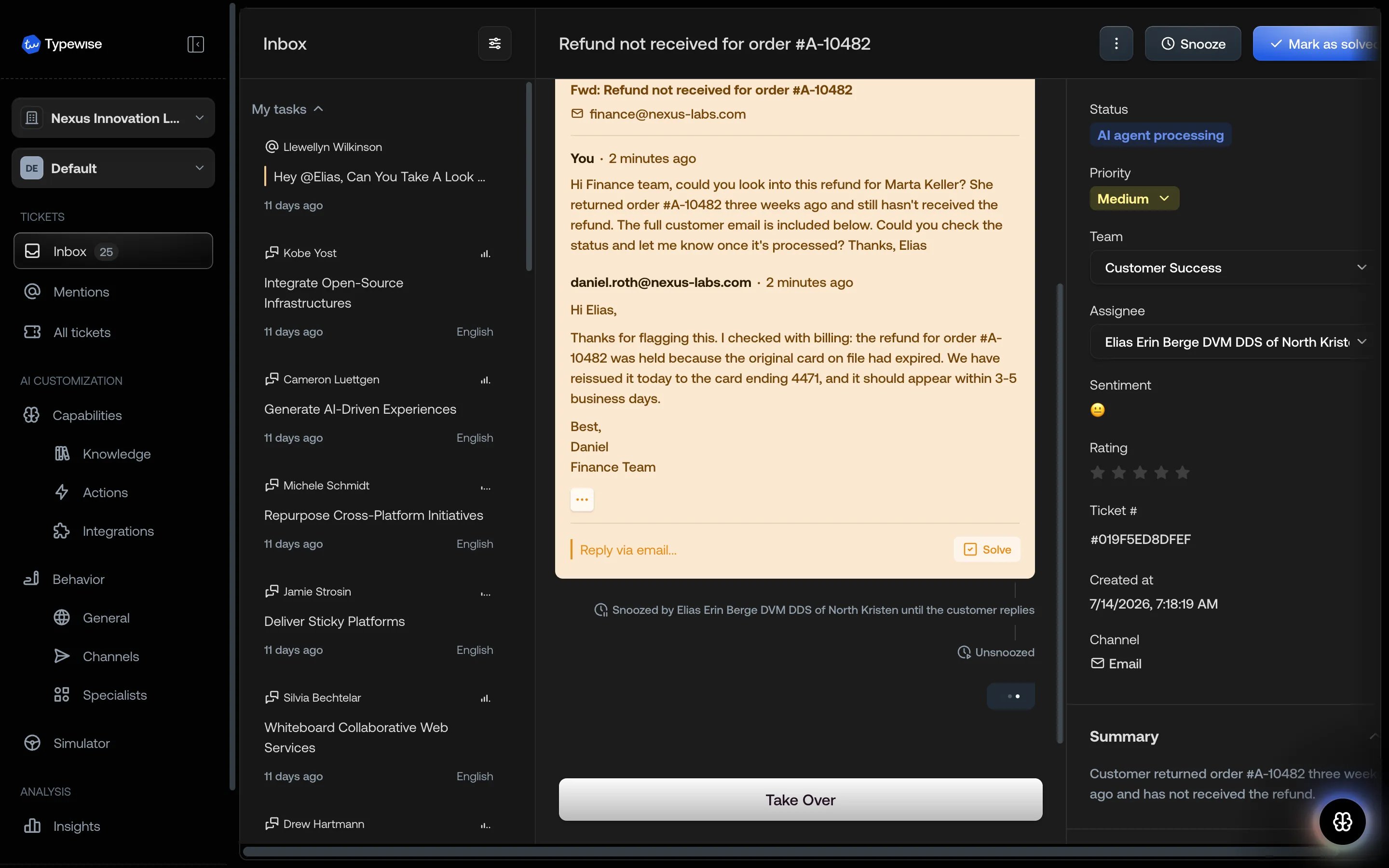
- View raw email: on an external reply, click the eye icon to see the raw email, including headers, quoted history, and signature.
- Quoted text: long quoted history is collapsed behind a … toggle. Click it to expand the quoted block.
Continue the conversation
If you need more from the external party after their reply, reply on the same thread using Reply via email in the forward thread. Your reply goes back to the same recipient and keeps the same thread, so their next reply lands on the ticket the same way. Replying to the customer is a separate action in the normal composer. The forward thread is internal and never reaches the customer.Solve and reopen a forward
When you no longer need the external thread, mark it Solve. This removes the forward reply card from the inbox and collapses the thread in the conversation to a short “Thread solved by …” receipt. If you need it again, Reopen the thread to bring it back into the conversation. A late reply that arrives after you solve a thread still lands on the ticket as a note.Limits
- One thread per address entered. There are no CC or BCC fields. Forwarding to several addresses sends a separate email and opens a separate thread for each one, and the same address added twice is forwarded twice.
- No recipient guardrails. Any valid email address is accepted, including the customer’s own address, so review the recipient before sending.
- Email only. Forwarding is sent by email regardless of the ticket’s original channel.
See also
- Snooze tickets: How snoozing removes tickets from your inbox until a reply
- Composer: Compose replies, notes, and forwards
- Mentions: Loop in colleagues who use Typewise with internal notes
- Inbox: Understanding the inbox and its sections